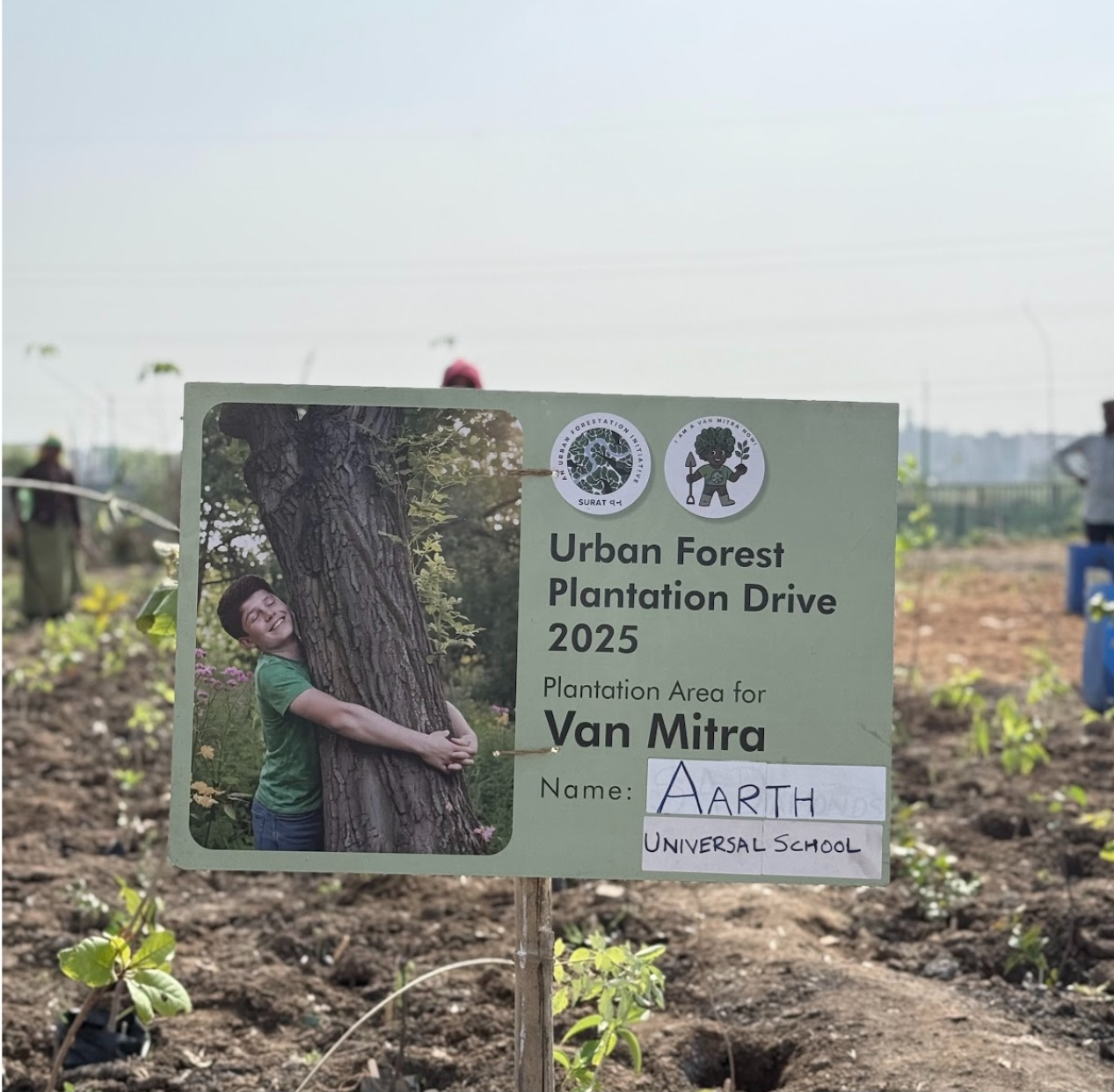
How learners are helping transform an old waste site into a thriving forest ecosystem
At Aarth Universal School in Surat, India learners are demonstrating how local action can support Ecosystem Restoration Education (ERE) and inspire shared responsibility for nature through afforestation, hands-on learning, and student-led fundraising.
To tackle one of the environmental challenges facing their city, waste management, the school partnered with the local non-profit Surat Van Foundation, which is working to transform former waste sites into thriving forest ecosystems.
Learners from the Middle Years Programme visited the Artha waste site, where they met restoration experts and learned about the Miyawaki method: an approach to creating dense forests using native tree species to support biodiversity and increase climate resilience. They then put their learning into practice by planting native trees at the site.
To support long-term restoration, the learners also organised two fundraising initiatives: the Aarth Premier League, a cricket league, and Ramzat, a charity Garba event, raising funds for further tree planting and forest development.
Their experience highlights how small actions can contribute to lasting change, where one small tree can support the survival of other samplings. By planting trees, raising funds, and working as a team, learners are helping restore local ecosystems while nurturing a sense of shared responsibility for nature.
Inspired by Aarth Universal School? Join #GenerationRestoration Schools, a global community of educators and learners across the FEE network and beyond who are exploring, understanding and taking action for ecosystem restoration.